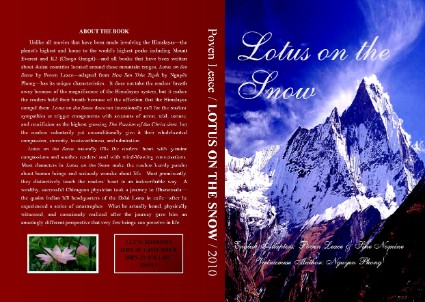
Welcome to Our SiteThroughout human history, although questions about life and of life always remain convoluted and constantly demand a great effort to answer, we rarely ask ourselves what life is all about and plunge into it without even trying to understand its meaning. Have we ever wondered who we were before we were born, who we are after we were born, and who will we be after we go through this life? What factors persistently influence our values, why does life have so many dissatisfactions, and why must we constantly struggle to survive in life? These discrete questions are particularly reserved for neither philosophers nor scholars, but they are rather for our true-self and us. If we are not honest with ourselves to find appropriate answers to the question—“what is the meaning of life?”, life is like a play in which we are actors being forced to perform until the curtain is going down or like a wild stream along which we are floating leaves being dragged aimlessly forever. What do we desperately need so we do not struggle to live? How do we know when we uncover our proper meaning of life? Lotus on the Snow is the personal account of a successful physician who pays the price for what he wants in life with a sick body, a broken family, an unfinished profession, insecure properties with intricate convolutions, and worst of all, deepening sorrows that seem to last forever . . . Until he identifies his own answer to the question—“What is the meaning of life?”, he genuinely enjoys his real happy, peaceful, and tranquil life—the life that he has never lived before. Reading Lotus on the Snow, we will also be astounded by how a ten-year old child with a few successes; an old beggar with no physical possession; a handsome football player with multiple careers including as a composer and a singer; a young, wealthy anthropologist with multi-discoveries; and a famous brainer with years of intellectual as well as spiritual experiences all found the meaning of their life. In Lotus on the Snow, Alan—coming from a poor, dysfunctional family—rises to fame, power, and wealth. He enriches his material life with a glorious mansion beside Lake Michigan, a vacation house on the top of Mt Vernon, a huge luxury yacht, and a number of enormous bank accounts in magnificent cities. Professionally, he is rapidly gaining a solid reputation, not only as a distinguished physician with high ranks but also as a trustworthy investor with judicious approaches. His personal life is fulfilled by a beautiful wife like a movie star and a long-hour desk job on the top of his regular duty at different hospitals. Although Alan is a classic yet typical victim from a poor, dysfunctional family, he becomes a skillful diplomatic, well-rounded, and wealthy Chicagoan physician despite all sorts of adversity. Why does he not feel contented and tranquil, why does he not gain poise and self-confidence, why does he end up with miseries and cancer spreads, and why does he constantly struggle and tussle for survival in life? Lotus on the Snow enthrallingly and captivatingly unfolds these unfathomable questions as miraculously as two twisted intertwined helical strands unwind from each other during the DNA replication process. Lotus on the Snow: Unlike all movies that have been made involving the Himalayas—the planet's highest and home to the world's highest peaks including Mount Everest and K2 [Chogo Gangri]—and all books that have been written about Asian countries located around these mountain ranges, Lotus on the Snow by Poven Leace et al.—adapted from Hoa Sen Trên Tuyết by Nguyên Phong—has its unique characteristics. It does not take the readers’ breath away because of the magnificence of the Himalayan system, but it makes the readers hold their breath because of the affection and nobility that the Himalayan people compel in them. Lotus on the Snow does not intentionally call for the readers’ sympathies or trigger enragements with accounts of arrest, trial, torture, and crucifixion as the highest grossing The Passion of the Christ does, but the readers voluntarily yet unconditionally give it their wholehearted compassion, sincerity, trustworthiness, and admiration. It naturally fills the readers’ heart with genuine compassion and soothes the readers’ soul with mind-blowing conversations. Most characters in Lotus on the Snow make the readers keenly ponder about human beings and seriously wonder about life. Most prominently, they distinctively touch the readers’ heart in an indescribable way. A wealthy, successful Chicagoan physician took a journey to Dharamsala—the quaint Indian hill headquarters of the Dalai Lama in exile—after he experienced a series of catastrophes. What he actually heard, physically witnessed, and consciously realized after the journey gave him an amazingly different perspective that very few beings can perceive in life. Insights of the main character and his trip: Alan—came from a poor dysfunctional family—is a diligent and persevering young man. In spite of all sorts of adversity, he has become a skillfully diplomatic, well-rounded, and wealthy Chicagoan physician after he left his poverty-stricken yet dilapidated family in a filthy city with obsolete companies releasing black smoke all year around. He enriched his material life with a glorious mansion beside Lake Michigan, a vacation house on the top of Mt Vernon, a huge luxury yacht, and a number of enormous bank accounts in a magnificent city. Professionally, he established a solid reputation—not only as a distinguished physician with high ranks but also as a renowned investor with judicious approaches. His personal life was fulfilled by a beautiful wife like a movie star and a stressful long-hour desk job on the top of his regular job at different hospitals. As a classic yet typical victim from a poor dysfunctional family, Alan eventually suffers from being emotionally unavailable, selfish, greedy, and egotistical. The price he paid for what he wanted in life is the combination of a sick body, a broken family, an unfinished profession, insecure properties with intricate convolutions, and worst of all, deepening sorrows that seem to last forever . . . After making an unexpected miraculous trip to Dharamsala, India, he has finally found the “Real Alan” who is capable of giving unconditional love, expecting absolutely nothing in return, and enjoying a peaceful, happy life—the life that he has never lived before. |
||
 |
||
